
Looking for How to Make Homemade Loquat Jelly - Easily! in 2026? Scroll down this page and follow the links. And if you bring home some fruit or vegetables and want to can, freeze, make jam, salsa or pickles, see this page for simple, reliable, illustrated canning, freezing or preserving directions. There are plenty of other related resources, click on the resources dropdown above. If you are having a hard time finding canning lids, I've used these, and they're a great price & ship in 2 days.
If you have questions or feedback, please let me know! There are affiliate links on this page. Read our disclosure policy to learn more.
How to Make Homemade Loquat Jelly - Easily!
Yield: 4 or 5 half-pint (8 ounce) jars
Click here for a PDF print version
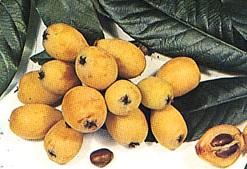 Making and canning your own
Loquat jelly is also quite easy. Here's how to do it, in easy steps and
completely illustrated. This example shows you how to make Loquat jelly, but you
can also use it to make Loquat jam (if you don't sieve or filter the Loquat
juice). Loquats are also called the Japanese, plum and Japanese
medlar; to the Italians, it is nespola giapponese; to French-speaking people, it
is neflier du Japon, or bibassier. In the German language, it is japanische
mispel, or wollmispel; in Spanish, nispero, nispero japones, or nispero del
Japón; in Portuguese, ameixa amarella, or ameixa do Japao.
Making and canning your own
Loquat jelly is also quite easy. Here's how to do it, in easy steps and
completely illustrated. This example shows you how to make Loquat jelly, but you
can also use it to make Loquat jam (if you don't sieve or filter the Loquat
juice). Loquats are also called the Japanese, plum and Japanese
medlar; to the Italians, it is nespola giapponese; to French-speaking people, it
is neflier du Japon, or bibassier. In the German language, it is japanische
mispel, or wollmispel; in Spanish, nispero, nispero japones, or nispero del
Japón; in Portuguese, ameixa amarella, or ameixa do Japao.
Ingredients
- 5 cups loquat juice (it will take about 10 lbs or 15 cups of fresh loquats to make 5 cups of juice)
- Sugar - 4 cups sugar
- Pectin - 1 and 1/4 box, or 5 tablespoons (pectin is a natural product, made from apples and available at grocery stores (season - spring through late summer) and local "big box" stores. It usually goes for about $2.00 to $2.50 per box. You will get best results with no-sugar needed pectin, whether you choose to add sugar or not! See here for more information about how to choose the type of pectin to use.
- Lemon juice (optional) - The Ball Blue Book recipe does not
include lemon juice, but adding 1/4 cup per batch can help improve the
set and reduce spoilage.
Equipment
- Large spoons and ladles,
- Jar funnel ($5 at Target, other big box stores, and often grocery stores; and available online - see this page) or order it as part of the kit with the Jar grabber .
- Jar grabber (to pick up the hot jars)- Big box stores and grocery stores sometimes carry them; and it is available online - see this page. It's a tremendously useful to put jars in the canner and take the hot jars out (without scalding yourself!). The kit sold at right has everything you need, and at a pretty good price:
- At least 1 large pot; I prefer 16 to 20 quart Nonstick ceramic coated pots for easy cleanup.
- Jelly strainer - see step 6 - or a colander and cheesecloth.
- 1 Water Bath Canner (a huge pot to sanitize the jars after filling (about $30 to $35 at mall kitchen stores, sometimes at big box stores and grocery stores.). Note: we sell canners and supplies here, too - at excellent prices - and it helps support this web site!
- Half pint canning jars (Grocery stores, like Publix, Kroger, Safeway carry them, as do some big box stores - about $7 per dozen 8 ounce jars including the lids and rings)
- Lids - thin, flat, round metal lids with a gum binder that seals them against the top of the jar. They may only be used once.
- Rings - metal bands that secure the lids to the jars. They may be reused many times.
Optional stuff:
- Foley Food Mill - not necessary; useful to mush up the fruit or if you want to remove seeds (for example, from blackberries) or make applesauce.
- Lid lifter (has a magnet to pick the lids out of the almost-boiling water where you sanitize them. ($4 at big box stores or it comes in the kit at left)
Loquat Jelly Directions - Step by Step
Step 1 - Select and wash the Loquats
You can use frozen or bottled Loquat juice and skip the steps about preparing the loquats and making the juice, sieving, etc.
Select full size loquats that are still hard. Wash loquats and remove seeds and blossom ends.
Step 2 - Wash the jars and lids
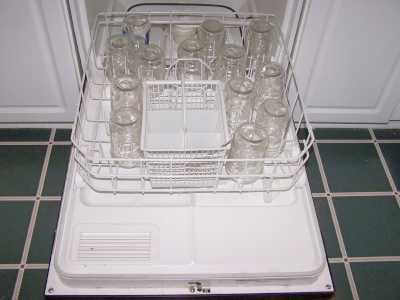
Now's a good time to get the jars ready, so you won't be rushed later. The dishwasher is fine for the jars; especially if it has a "sanitize" cycle, the water bath processing will sanitize them as well as the contents! If you don't have a dishwasher with a sanitize cycle, you can wash the containers in hot, soapy water and rinse, then sanitize the jars by boiling them 10 minutes, and keep the jars in hot water until they are used.
 NOTE: If a canning recipe calls for 10 minutes or more of process time in the canner, then the jars do not need to be "sanitized" before filling them.
But really, sanitizing them first is just good hygeine and common sense! See this page for more detail about cleaning and sanitizing jars and lids.
NOTE: If a canning recipe calls for 10 minutes or more of process time in the canner, then the jars do not need to be "sanitized" before filling them.
But really, sanitizing them first is just good hygeine and common sense! See this page for more detail about cleaning and sanitizing jars and lids.
Put the lids into a pan of hot, but not quite boiling water (that's what the manufacturer's recommend) for 10 minutes, and use the magnetic "lid lifter wand" to pull them out.
Leave the jars in the dishwasher on "heated dry" until you are ready to use them. Keeping them hot will prevent the jars from breaking when you fill them with the hot jelly.
Step 3 - Cook the Loquats until they are soft
Place the loquats in a saucepan and barely cover with cold water. Cook them slowly (low - medium heat) until their pulp is very soft. Stir to prevent scorching.
Step 4 - Measure out the sugar

Check the directions with the pectin. I prefer to use the no-sugar-needed pectin and then use 4 cups of sugar. That produces the best taste, set and color . I also usually add an additional 2 tablespoon3 of pectin (5 tablespoons, total) because I like a firm set. Mix the dry pectin with about 1/4 cup of the sugar and Keep this separate from the rest of the sugar. If you are not using sugar, you will just have to stir more vigorously to prevent the pectin from clumping. Set both aside for now.
You can make this sugarless; using Stevia or Splenda; but I'll forewarn you that the results aren't nearly as good (it's darker, runnier, more bland)
Step 5 - Sieve the cooked loquats
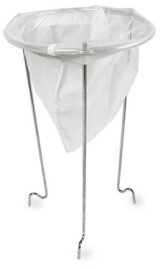
 You can either put the soft cooked
loquats through a jelly strainer
(about $9.00, see ordering at right) which results in the most clear
jelly and is easiest to use, or pour them through cheesecloth in
a colander; or use a food mill. Or if you don't mind chunky jelly (jam), just let the juice stand
for 20 minutes, and Decant (pour off) the clear liquid to use and leave
the solids behind.
You can either put the soft cooked
loquats through a jelly strainer
(about $9.00, see ordering at right) which results in the most clear
jelly and is easiest to use, or pour them through cheesecloth in
a colander; or use a food mill. Or if you don't mind chunky jelly (jam), just let the juice stand
for 20 minutes, and Decant (pour off) the clear liquid to use and leave
the solids behind.
You may also want to run the crushed cooked loquats through a Foley food mill (about $20 - see this page) BEFORE the jelly strainer - it helps to extract more juice and jet out the large skins that will clog the strainer. It's not necessary, but helps you get the most out of the loquats.
 See here for related tools, equipment, supplies on Amazon
|
If you need a stopping point and want to finish up the next day, this is a good place. Sometimes, jelly gets crystals, called tartrate crystals, forming in the jelly. They're not harmful and don't affect the taste, but some people don't like the appearance. I rarely even see them! But if you do, let juice stand in a cool place overnight, then strain through two thicknesses of damp cheesecloth to remove any crystals that have formed.
Drain the juice without pressing or squeezing, which will cause cloudy jelly. If a fruit press is used, the juice should be restrained through a jelly bag.
 Step
6 - Add the pectin to the hot strained juice and bring to a full boil
Step
6 - Add the pectin to the hot strained juice and bring to a full boil
Add the (optional) 1/4 cup of lemon juice, stir the pectin into the loquat juice and put the mix in a big pot on the stove over medium to high heat (stir often enough to prevent burning). It should take about 5 to 10 minutes to get it to a full boil (the kind that cannot be stirred away).
Notes about pectin: I usually add about 25% - 30% more pectin (just open another pack and add a little) or else the jelly is runnier than I like. With a little practice, you will find out exactly how much pectin to get the thickness you like.
Another tip: use the low sugar pectin. It cuts the amount of sugar you need from 7 cups per batch to the 4 cups called for in this recipe! And it tastes even better! On the other hand; I have never had success using no sugar at all; even with the No-sugar-needed pectin. It always turned out runny and bland. You might want to try using the low sugar recipe with a mixture of sugar and Stevia (in a prepared form like Truvia, it measures same as sugar; if you use another form, you will need do your own conversion) - or Splenda, if you prefer, ; that could work.
Is your
jelly too runny? Pectin enables you to turn out
perfectly set jelly every time. Made from natural apples, there are also natural no-sugar pectins that allow you to reduce the sugar you add by half or even eliminate sugar.!
Get them all here at the best prices on the internet!
Step 7 - Get the lids heating
If you didn't do so already, put the lids into a pan of hot water for at least several minutes; to soften up the gummed surface and clean the lids.
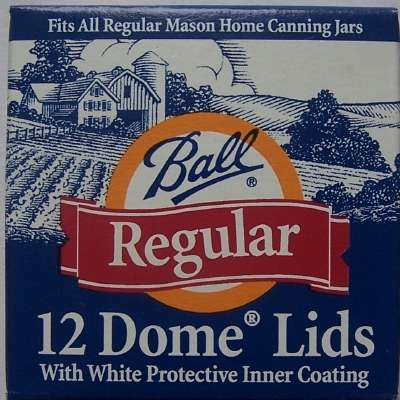

Need lids, rings and replacement jars?
Get them all here, delivered direct to your home, at the best prices on the internet!
Step 8 - Add the remaining sugar and bring to a boil
 When the
loquat-pectin mix has reached a full boil, add the rest of the sugar (about
4 cups of sugar per 5 cup batch of loquat juice) and then bring it back to
a boil and boil hard for 1 minute.
When the
loquat-pectin mix has reached a full boil, add the rest of the sugar (about
4 cups of sugar per 5 cup batch of loquat juice) and then bring it back to
a boil and boil hard for 1 minute.

Step 9 - Testing for "jell" (thickness)
I keep a metal tablespoon sitting in a glass of ice water, then take a half spoonful of the mix and let it cool to room temperature on the spoon. If it thickens up to the consistency I like, then I know the jelly is ready. If not, I mix in a little more pectin (about 1/4 to 1/2 of another package) and bring it to a boil again for 1 minute.
Step 10 - Fill the jars and put the lid and
rings on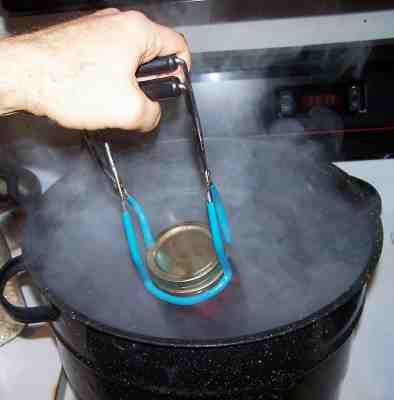
 Fill them to within 1/4-inch of the top (that's leaving 1/4 inch headspace), wipe any spilled jelly off the
top, seat the lid and tighten the ring around them. Then put the filled jars into the canner!
Fill them to within 1/4-inch of the top (that's leaving 1/4 inch headspace), wipe any spilled jelly off the
top, seat the lid and tighten the ring around them. Then put the filled jars into the canner!
This is where the jar tongs come in really handy!
Step 11 - Process the jars in the boiling water bath
 Keep the jars covered with at least 2 inches of water. Keep the water
boiling. In general, boil them for 5 minutes, which is what SureJell (the
makers of the pectin) recommend. I say "in general" because you have
to process (boil) them longer at higher altitudes than sea level, or if you
use larger jars, or if you did not sanitize the jars and lids right before
using them. The directions inside every box of pectin will tell you
exactly - and see the Table below for altitude differences. The directions on the pectin tend to be
pretty conservative.
Note: Some people don't even boil the jars; they just ladle it hot into hot jars, put the lids and rings on and invert them, but putting the jars in the boiling water bath REALLY helps to reduce spoilage! To me, it makes little sense to put all the working into making the
jelly and then not to process the jars to be sure they don't spoil!
Keep the jars covered with at least 2 inches of water. Keep the water
boiling. In general, boil them for 5 minutes, which is what SureJell (the
makers of the pectin) recommend. I say "in general" because you have
to process (boil) them longer at higher altitudes than sea level, or if you
use larger jars, or if you did not sanitize the jars and lids right before
using them. The directions inside every box of pectin will tell you
exactly - and see the Table below for altitude differences. The directions on the pectin tend to be
pretty conservative.
Note: Some people don't even boil the jars; they just ladle it hot into hot jars, put the lids and rings on and invert them, but putting the jars in the boiling water bath REALLY helps to reduce spoilage! To me, it makes little sense to put all the working into making the
jelly and then not to process the jars to be sure they don't spoil!
| Recommended process time for Loquat Jelly in a boiling water canner. | ||||
| Process Time at Altitudes of | ||||
| Style of Pack | Jar Size | 0 - 1,000 ft | 1,001 - 6,000 ft | Above 6,000 ft |
| Hot | Half-pints or Pints |
5 min | 10 | 15 |
 Step 12 - Remove and cool the jars - Done!
Lift the jars out of the water with your jar lifter tongs and let them cool without touching or bumping them in a draft-free place (usually takes overnight) You can then remove the rings if you like, but if you leave them on, at least loosen them quite a bit, so they don't rust in place due to trapped moisture. Once the jars are cool, you can check that they are sealed verifying that the lid has been sucked down. Just press in the center, gently, with your finger. If it pops up and down (often making a popping sound), it is not sealed. If you put the jar in the refrigerator right away, you can still use it. Some people replace the lid and reprocess the jar, then that's a bit iffy. If you heat the contents back up, re-jar them (with a new lid) and the full time in the canner, it's usually ok.
Once cooled, they're ready to store. I find they last up to 12 months. But after about 6 to 8 months, they get darker in color and start to get runny. They still are safe to eat, but the flavor and texture aren't as good. So eat them in the first 6 months after you prepare them!


Looking for canning equipment and supplies?
Water bath canner with a jar rack
Pressure canners for gas, electric and induction stoves: Presto 23Qt or T-fal 22Qt
 Canning scoop (this one is PERFECT)
 Ball Blue book (most recent version)
Jars: 8oz canning jars for jams

Want to start your own Podcast, Blog, Vlog, etc? This
GoPro kit has EVERYTHING you need:
all accessories
Find Other types of farms:
Farm markets and roadside stands
Road trips and camping resources
Local Honey, apiaries, beekeepers
Consumer fraud and scams information
Home canning supplies at the best prices on the internet!
Maple Syrup Farms, sugarworks, maple syrup festivals
Environmental information and resources
Farms For Your Event for birthday parties, weddings, receptions, business meetings, retreats, etc.
Festivals - local fruit and vegetable festivals
Get the
most recent version of
the Ball Blue Book
Canning and preserving, making jams, salsa, sauces, pickles, etc is SO easy with our step by step directions! Just about all you need is a canner and canning jars!
