PickYourOwn.org Find a pick-your-own farm near you, then learn how to can and freeze!
- Home
- Start here!
- Correct a listing
- Add a farm
- Feedback comments
- Farmers: add or update your farm
- Search
- Email this page to others
-


PickYourOwn.org Find a pick-your-own farm near you, then learn how to can and freeze!

PYO's have been around for years. Clearly, the modern form of PYO farms goes back to a novelty in the Victorian era and the a resurgence in the 1950's. I suppose one could argue that they trace their roots to medieval times and sharecropping.
It's difficult to find anything from an authoritative source about the origins of pick-your-own (PYO) or U-pick farming. When I lived in England, I was told that Victorian market growers near London in the 19th century advertised country outings to their fields in the countryside, so city dwellers could go to pick vegetables and have a home-cooked farm meal.
Verbal history in the northeast of the U.S. claims that U-pick operations have existed since the early 19th century, when apple growers in New Jersey and New York advertised country outings of picking and picnicking among the fruit trees. This apparently grew during the baby boom of the 1950's with roadside fruit stands allowing customers to pick their own fruit.
More organized operations followed, with blackberries, blueberries and strawberries joining apples as the most common pick-your-own produce.
Another practice that may have simultaneously contributed to the growth of U-pick farming was "gleaning". Some farmers started charging suburban dwellers for access to go out into the farm's fields after the main harvest was finished. It was a win-win, as the farmer earned income for crops that would not have been otherwise harvested, and these "gleaners" could buy large quantities of fresh produce for very low prices. This aspect of U-pick farming apparently died down in the 1960s, when understanding of risks of exposures to field pesticides became known.
The 1980's saw the start of the current book in PYO operations, as more people became concerned about having access to fresher, less processed food. More recent issues with "green" issues of buying locally grown foods, safety of the food supply system and many news stories of the dangers and lack of controls of foreign crops has added renewed growth.
PYO farming is definitely growing again. Almost all of the recent closures of pick-your-own farms can be 3 issues:
1. Aging farmers dying or retiring without a successor in the next generation interested in following their footsteps,
2. Farms close to large metropolitan centers being overtaken by growth and finding the profits in selling the land for development to be irresistible and/or
3. Liability issues, particularly for very small operations.
These are overwhelmingly smaller operations. Large ones that understand how to transition from traditional farming to the new form of agri-entertainment or agri-tourism do very well.
And for each operation that closes, a new one is coming on board, while many existing pyo farms are expanding.
Crops that are especially suited for PYO marketing are those that require little expertise to harvest, but demand considerable harvest labor per acre. These include:
The latter 3 are fairly new phenomena. Growers have found success that the "U-Cut" flowers approach eliminates the considerable harvest labor requirement. Choose-and-cut Christmas trees have long been around for ages but are now being combined with hayrides, sleigh rides, and entertainment (music and food) by more savvy operators. Pumpkin patches and corn mazes are seeing an unprecedented growth. These are particularly high profit operations.
The success of any of these can be attributed to marketing, location, liability and labor. The issue of what makes for a successful PYO operation is another topic.


This page was updated on
Want to make a donation?
PickYourOwn.org does not charge either farmers or consumers! I do all
of the programming, web design and updates myself. If you'd like to make a
donation to help me pay to keep the website going, please make a donation to me
at Benivia through our secure donation processor. Just click the button
below and follow the instructions:

|
Home Canning Kits Features:This is the same type of standard canner that my grandmother used to make everything from applesauce to jams and jellies to tomato and spaghetti sauce. This complete kit includes everything you need and lasts for years: the canner, jar rack, jar grabber tongs, lid lifting wand, a plastic funnel, labels, bubble freer. It's much cheaper than buying the items separately. You'll never need anything else except jars & lids (and the jars are reusable)! There is also a simple kit with just the canner and rack, and a pressure canner, if you want to do vegetables (other than tomatoes). To see
more canners, of different styles, makes and prices, click here! |
|
|
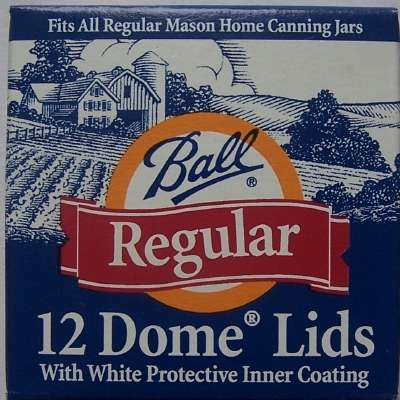
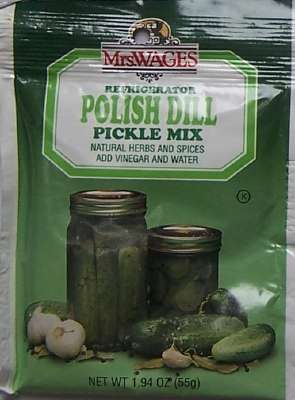
Lids, Rings, Jars, mixes, pectin, etc.Need lids, rings and replacement jars? Or pectin to make jam, spaghetti sauce or salsa mix or pickle mixes? Get them all here, and usually at lower prices than your local store! |


[General picking tips and a guide to each fruit and vegetable] [How much do I need to pick? (Yields - how much raw makes how much cooked or frozen)] [Selecting the right varieties to pick] [All about apple varieties - which to pick and why!] [Picking tips for Vegetables] [ Strawberry picking tips] [ Blueberries picking tips]
[ All About Home Canning, Freezing and Making Jams, Pickles, Sauces, etc. ] [FAQs - Answers to common questions and problems] [Recommended books about home canning, jam making, drying and preserving!] [Free canning publications to download and print]
All images and text © Copyright Benivia, LLC 2013
Disclaimer and
Privacy Policy
Permission is given to link to any page on
www.pickyourown.org Do NOT copy and republish this page in whole or part, that is a copyright violation which will be prosecuted: link to the page instead!